MAGI-2 in one paragraph
MAGI-2 is an AI video generation model with about 480 billion parameters, released on November 24, 2026. It generates up to 30 seconds of 1080p video at 25 frames per second in a single pass, with synchronized audio — dialogue with lip-sync, foley, ambient sound and music — produced by the same model as the picture. One request can combine up to 20 references (up to 10 images, 5 video clips and 5 audio clips), and the model supports timeline-level shot-cut control and targeted editing of existing video. You will also see it written as MAGI 2 or MAGI2; all three names refer to the same model. It follows MAGI-2 Preview, a research release from August 2026.
This guide sums up the model’s public release notes, what early testers saw, and what it all means if you want to make videos with it. Each fact says where it comes from.
MAGI-2 specifications
| Item | MAGI-2 |
|---|---|
| Release date | November 24, 2026 |
| Predecessor | MAGI-2 Preview (August 5, 2026) |
| Total parameters | ~480B |
| Active parameters per token | ~28B |
| Architecture | Single-stream Transformer with Multi-Head Latent MoE |
| Pre-training data | ~4T tokens, about 1 billion samples |
| Maximum length | 30 seconds per generation |
| Resolution and frame rate | 1080p, 25 fps |
| Aspect ratios | Six |
| Audio | Native: dialogue with lip-sync, foley, ambience, music |
| References | Up to 20: ≤10 images, ≤5 videos, ≤5 audio clips |
| Control | Timeline and shot-cut control; editing of existing video |
| Video Arena Elo (AA v2.1, 4-task average) | 1150.3 |
| Open weights | Announced; not yet released as of November 26, 2026 |
Source: the MAGI-2 release notes and the MAGI-2 Preview research post.
How MAGI-2 works
One stream for text, video and audio
MAGI-2 keeps the single-stream design first proven in the daVinci-MagiHuman research model: text, video and audio tokens are placed in one continuous sequence and processed by the same Transformer backbone using self-attention. There is no separate audio tower bolted on afterwards. Because lip movement, body motion, environmental sound, music and camera rhythm all describe the same event, letting them exchange information throughout the network is what allows MAGI-2 to plan picture and sound together.
Multi-Head Latent MoE
A dense 480B model would be too slow and expensive to train and run on long video sequences. MAGI-2 uses a Mixture-of-Experts design in which only about 28B of its parameters are active for each token. Its specific variant, Multi-Head Latent MoE, splits every token into several independent heads; each head has its own router and its own pool of small experts. In the MAGI-2 Preview configuration, for example, each sparse layer had 12 heads with 256 experts per head, and each head picked its top 6 experts.
The practical reason is systems efficiency. In a standard MoE, every token is routed first and then sent across GPUs, so communication grows with the number of experts selected and fluctuates from batch to batch. Multi-Head Latent MoE enables Head Parallel: activation slices are exchanged between machines by fixed head ownership, and the data-dependent routing happens locally. Communication shapes become predictable, which is what made training at 480B practical.
A training stack built for scale
The release notes name four pieces of the training system: Head Parallel and MagiFSDP for sharding activations and expert states, MagiMoE for efficiently executing thousands of narrow experts per layer, and MagiMuon, an optimizer that applies Muon orthogonalization per head and per expert. Under matched compute, the team reports roughly a 22% training speedup for Multi-Head Latent MoE over a single-head LatentMoE baseline, along with consistently lower validation loss than a standard MoE.
4T tokens without the “filtering trap”
Data grew about 3× over the Preview to roughly 4T tokens across about 1 billion samples, annotated in three weeks. The team chose not to filter out difficult footage. Multi-person interactions, fast cuts, on-screen text and dense soundscapes were kept and described with precise multimodal captions. The reasoning: if data is simplified to suit a small model, the data itself becomes the ceiling for a larger one. At 480B × 4T, the release notes say many structural failures — extra fingers, motion collapse — largely recede during pre-training.
Post-training and 1080p upscaling
With structure handled in pre-training, reinforcement learning focuses on visual and acoustic craft: lighting depth, micro-texture, fur and material realism. A separate latent spatiotemporal upscaler lifts output to 1080p at 25 fps and re-injects the original reference images during upscaling, which helps small faces stay recognizable and on-screen text stay readable across a 30-second scene.
What MAGI-2 can create
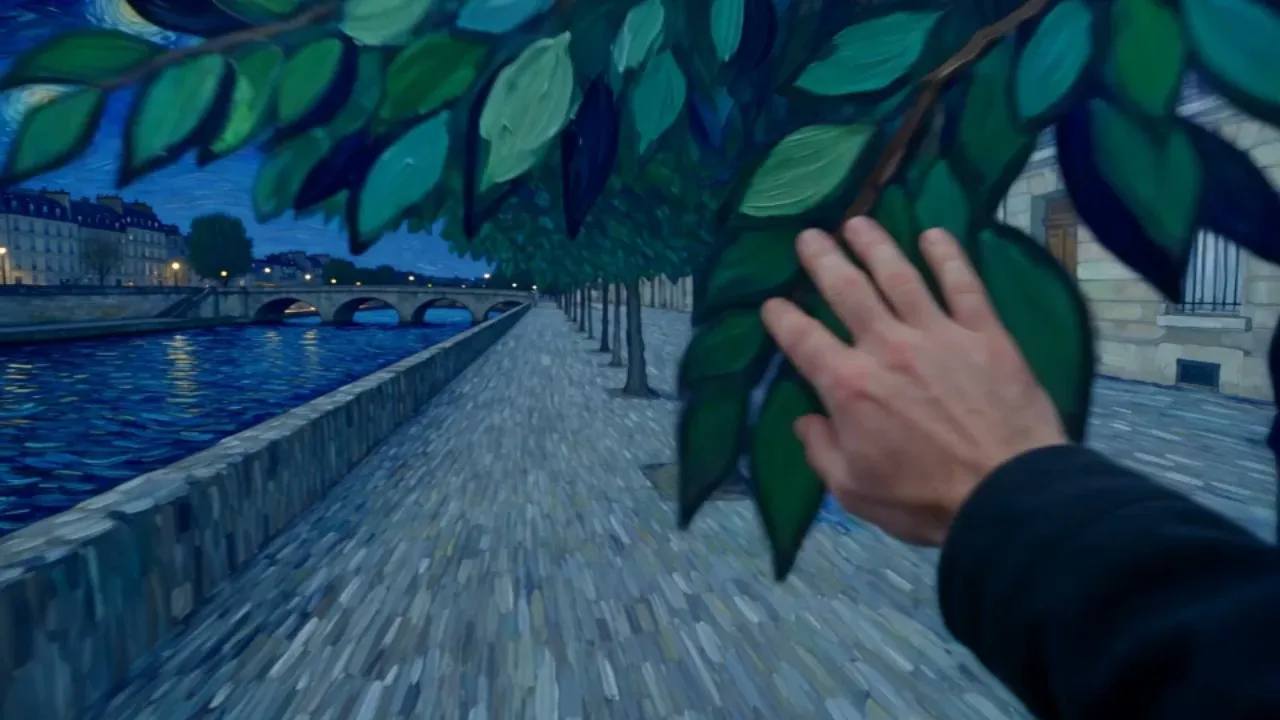
- Long takes. Up to 30 seconds in one continuous shot. One release example moves a traveler through five famous paintings without a cut. Watch the long-take examples.
- Native audio. Dialogue with lip-sync, footsteps and water on the right frame, ambience that follows the camera, and music generated alongside the picture. See dialogue and audio examples.
- Omni-reference. Up to 20 references in one request, each with its own role: a character sheet, a location, a motion clip, a voice. Explore omni-reference.
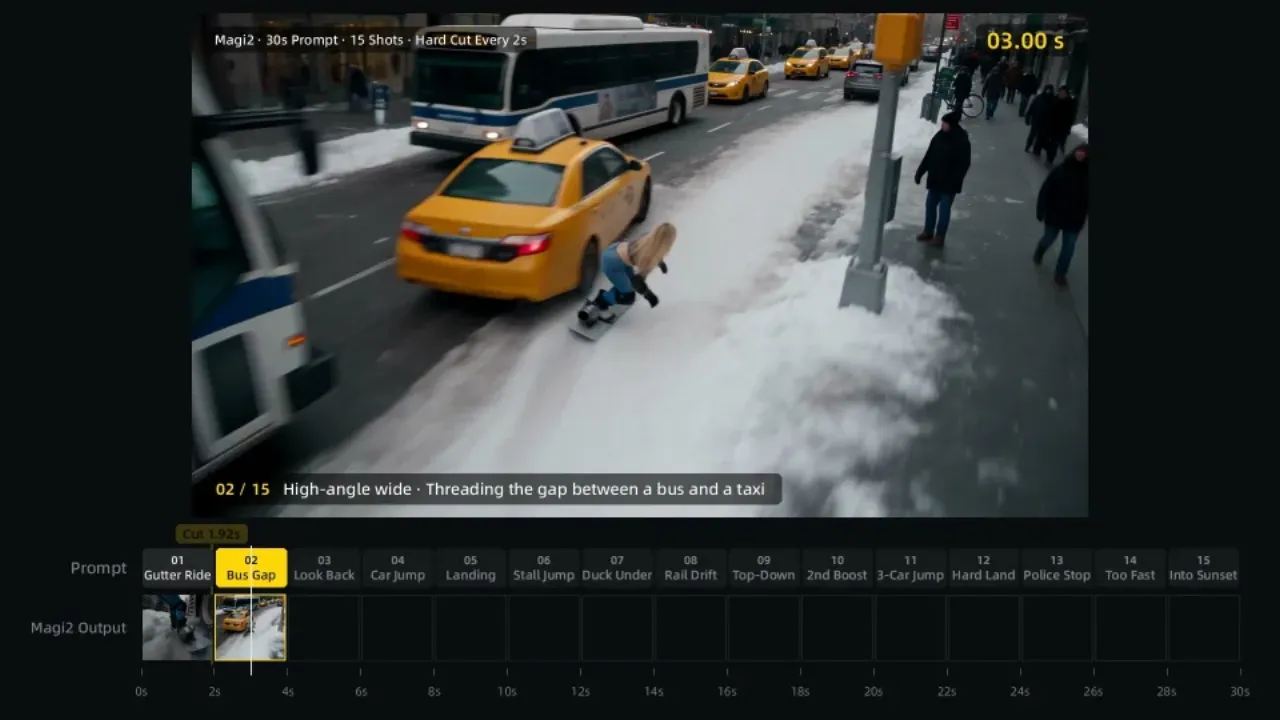
- Timeline control. Prompts written as time ranges, with hard cuts at specific seconds.
- Editing. Targeted changes to an existing video while the rest of the shot stays stable.
- Six aspect ratios for widescreen, vertical and square placements.
Benchmarks and public tests
The release notes report a 4-task average Elo of 1150.3 on Artificial Analysis Video Arena v2.1, up 151.8 points from MAGI-2 Preview’s 998.5. Chinese tech media also reported that MAGI-2 briefly ranked first on the Artificial Analysis image-to-video (with audio) leaderboard at launch.
Creators who tested MAGI-2 before launch pointed out:
- Cut precision. In a reported 20-shot test with 19 planned cut points, MAGI-2 hit all 19 with an average offset of 0.05 seconds; in a 12-cut test the average offset was 0.028 seconds, about two frames at 25 fps at worst.
- Instruction following and camera work. Complex orbit, crane and tracking moves were followed closely, and testers described a low rate of unusable generations.
- Long scripts. Reports mention scripts of up to about 20,000 characters.
Emergent behavior: reasoning, directing and translation
While evaluating the pre-trained 480B checkpoint with prompt enhancement switched off, the team saw behaviors nobody trained for directly:
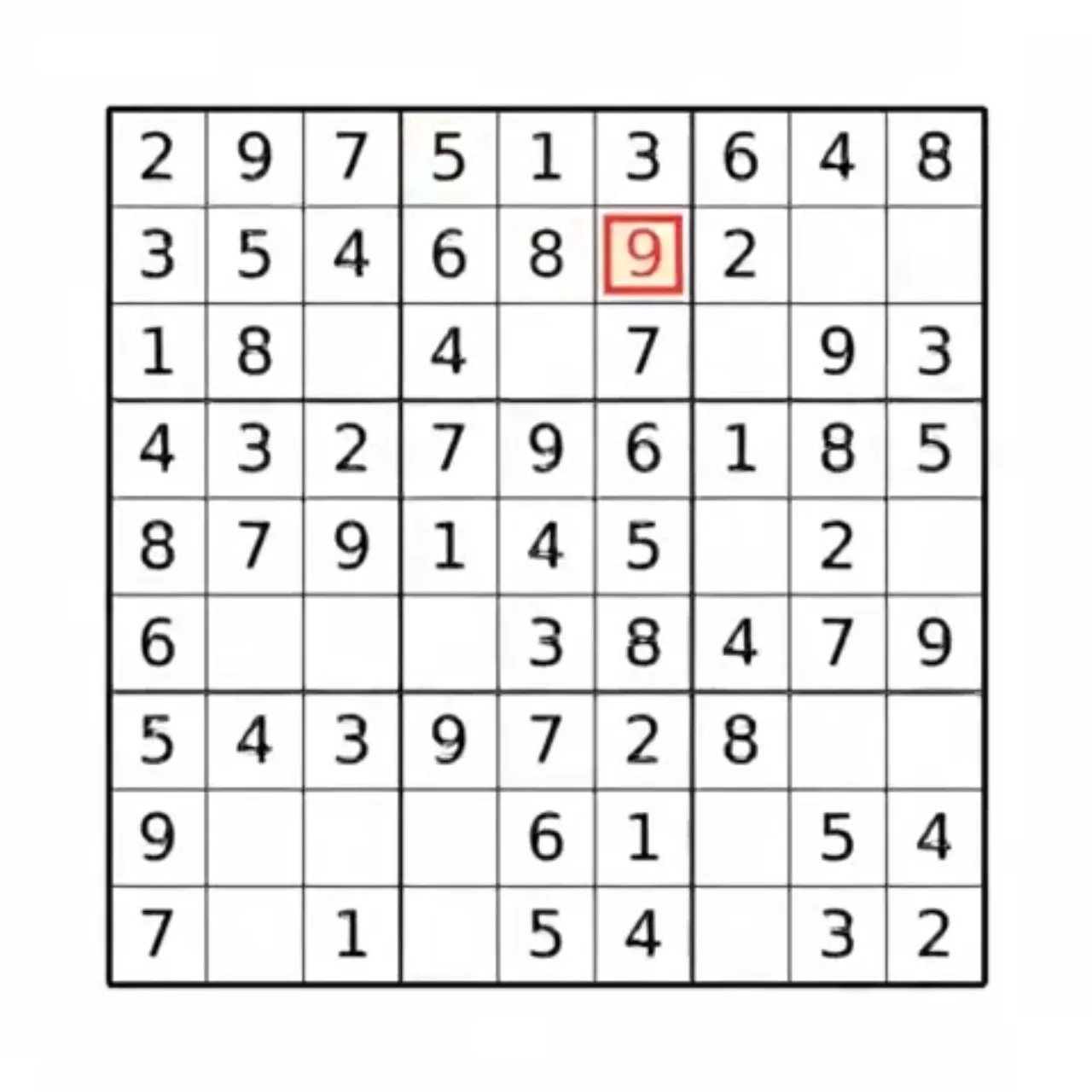
- Visual reasoning. Symmetry completion, mazes and 9×9 Sudoku: the model kept every given digit and filled the grid correctly in its probes.
- Autonomous directing. Given only character references and three story beats, it planned framing, perspective switches and close-ups on its own.
- Cross-lingual dialogue. Asked to have a character speak another language, it translated and spoke the line without an external language model.
The release notes also say these behaviors become harder to trigger after aesthetic fine-tuning — a trade-off similar to the “alignment tax” seen in large language models — and treats preserving them as an open research goal.
Limitations to know
The release notes are upfront about what still needs work: extreme high-speed motion can produce trajectory or continuity artifacts; medium and wide 2D animation can look overly smooth in fine motion; and complex soundscapes need richer layering. Public testers add that voices can still sound synthetic, fight scenes need detailed action descriptions, and very long, crowded prompts can cause deformation. Write detailed but focused prompts — see our MAGI-2 prompt guide.
Open weights
Open weights and a detailed technical report have been announced, subject to compliance requirements. As of November 26, 2026, they have not been published. MAGI-2 has also reportedly been adapted to Chinese accelerators from Hygon and Moore Threads. For the full story of the MAGI family’s open releases, read MAGI-2 open source.
How to use MAGI-2 on magi-2.si
MAGI-2 sits at the top of our model menus. Open text to video, image to video or media to video, choose MAGI-2, set the length (4–30 seconds) and aspect ratio, and generate. It renders 1080p with native sound and costs 25 credits per second; a generation usually takes 15–20 minutes, and the finished video lands in My Creations. The other connected models, including MiniMax H3, Seedance 2.5, Kling 3.0 and Veo 3.1 fast, stay in the same menu.
MAGI-2 FAQ
Is MAGI-2 the same as MAGI 2 or MAGI2?
Yes. MAGI-2 is the usual spelling; MAGI 2 and MAGI2 are other ways people write the same model name.
How is MAGI-2 different from MAGI-2 Preview?
The Preview (August 2026) had about 114B parameters with 6B active; MAGI-2 has about 480B with 28B active, about 3× more data and a 151.8-point higher Video Arena Elo. Read the full comparison.
Can MAGI-2 make videos longer than 30 seconds?
A single generation is limited to 30 seconds. Longer pieces are built by planning several scenes and keeping characters consistent with references.
Does MAGI-2 support vertical video?
Yes. MAGI-2 supports six aspect ratios, including vertical formats for short-video platforms.
Is MAGI-2 open source?
Not yet. Open weights have been announced but not released. Read what we know about MAGI-2 open source.

 Model guides