How MAGI-2 reads a prompt
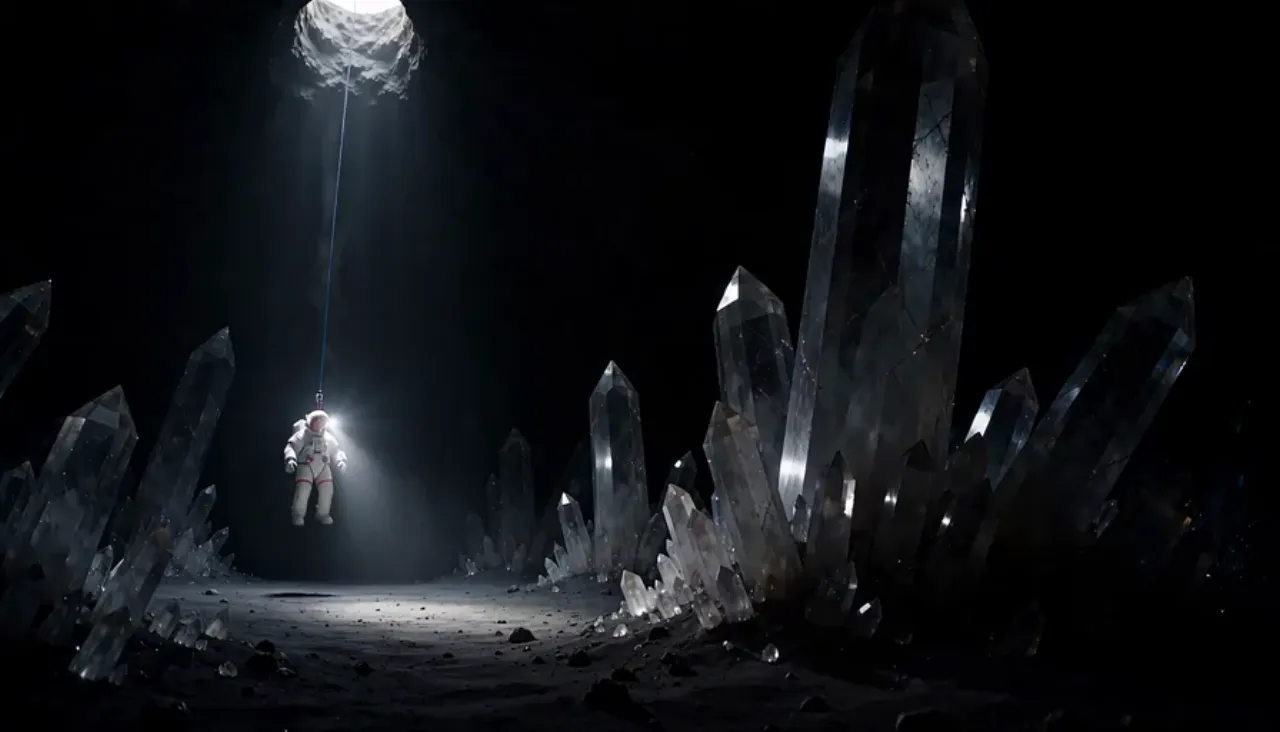
MAGI-2 reads a prompt more like a director’s shot list than a caption. It can hold up to 30 seconds in one generation, place hard cuts on specific seconds and generate dialogue, foley and music with the picture, so it rewards prompts that describe *what happens when* and *what you should hear*. Public testers found that short, vague prompts leave too much to chance, while detailed prompts that name the action, camera and sound produce usable results in very few attempts.
Two caveats from the same tests: very long prompts that pile up complex actions can cause deformation, and fight choreography needs each movement described explicitly. Aim for detail, not clutter.
A structure that works
| Part | What to write | Example |
|---|---|---|
| Format | Duration, aspect ratio, capture style | “30 seconds, 16:9, handheld phone footage” |
| Subject | Who or what, with fixed traits | “a lighthouse keeper in a yellow raincoat” |
| Setting | Place, time, weather, light | “spiral staircase at dusk, storm outside” |
| Beats | Action split into time ranges | “0–10 s … 10–20 s … 20–30 s …” |
| Camera | Shot size and movement per beat | “low angle, rising with him; hard cut to …” |
| Sound | Dialogue, foley, ambience, music | “wind through the stairwell, the lamp hums” |
| Constraints | What must not change or happen | “one continuous take, no text on screen” |
You rarely need every row. Start with format, subject, beats and sound, then add camera and constraints where results drift.
Write long scenes as beats
Time ranges give MAGI-2 a plan for a 30-second take. Give each beat one main action and one camera instruction.
30 seconds, 16:9, cinematic handheld. A street-food cook at a rainy night market. 0–8 s: wide shot down the crowded lane, neon reflections on wet ground, sizzling and chatter. 8–18 s: the camera pushes in as she flips noodles in a flaming wok; the fire flares on the beat. 18–24 s: hard cut to a close-up of the bowl being filled, steam rising. 24–30 s: she hands it across the counter and smiles; the camera pulls back into the crowd as rain grows louder. Keep her apron, face and the red lanterns consistent.
Try this prompt
Put cuts exactly where you want them
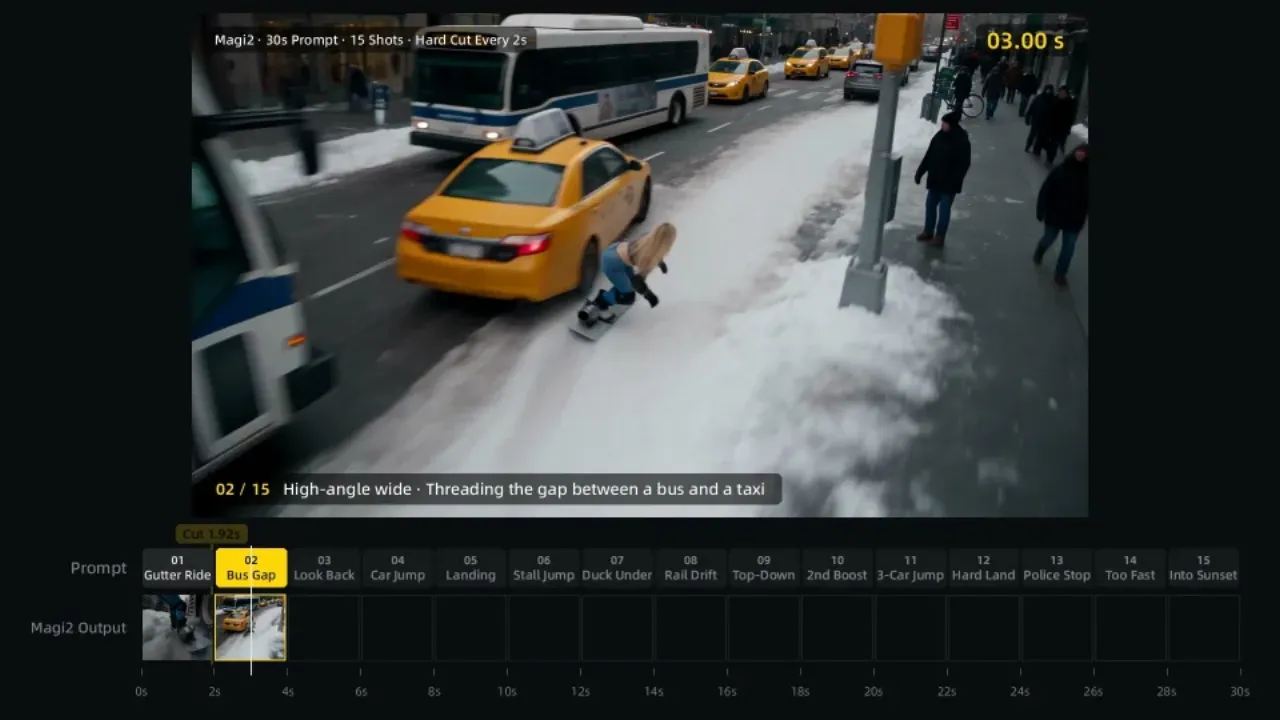
MAGI-2 follows explicit cut instructions closely; in one reported test it hit 19 of 19 planned cut points with an average offset of 0.05 seconds. Use the word “hard cut” with a time or an event, and describe the new shot right after it. You can also tie cuts to motion, as in this public physics test that cuts on every impact (translated from a Chinese creator test):
Handheld iPhone footage, real everyday daylight, no cinematic grading or visual effects, slight natural shake. Fast action with hard cuts that land on each burst or splash. A winter street: a sneaker kicks apart a half-meter pile of snow and a cloud of powder bursts toward the lens → cut to a tiled kitchen: a large glass jar full of hard candy slips and shatters, shards and hundreds of candies bounce in every direction → cut to a pool deck: a young man in a hoodie slips on wet tiles and falls into the water, throwing up a two-meter column of spray → cut to a living-room floor: a shaken bottle of cola hits the ground and sprays foam that knocks over a row of paper cups → cut to an open yard: a needle pops a clear balloon filled with colored powder and the powder blooms into a drifting cloud. Normal speed throughout; obey real gravity, elastic collisions, fluid splashes and dust spread; no clipping, floating or vanishing objects. No dialogue — only phone-recorded sounds of snow, breaking glass, bouncing candy, splashing water, spraying soda and the balloon pop.
Try this promptDirect the camera
Describe camera movement in physical terms — path, height, speed — and keep subject motion at normal speed so the camera carries the rhythm. This public test prompt (translated) produced a bold, precise orbit in one try:
Shot on an iPhone: a smooth side tracking shot of a female model in a long coat, full body. Move closer from the front-side and speed up slightly, arc around to her back and rise quickly to a top-down view. Arc back down fast to the front, hold on a close-up of her face for a moment, then accelerate backward and upward, ending softly on a high, wide view of the city. Natural 28–35 mm wide-angle look; keep distance in close-ups to avoid stretching the face or limbs. Ease in and out of every rise and fall; she moves at normal speed and the camera creates the rhythm. Continuous parallax: near objects shift a lot, distant ones a little, so the city never rotates like a flat backdrop. One continuous take; music matches the camera’s rhythm.
Try this promptGive each reference a job
MAGI-2 accepts up to 20 references per request — up to 10 images, 5 videos and 5 audio clips. Results improve when every file has a clear role:
| Reference | Use it for | Say in the prompt |
|---|---|---|
| Character sheet or turnaround | Face, wardrobe, proportions | “Keep the character from the reference sheet” |
| Location still | Set layout, light, palette | “The scene takes place in the reference garden” |
| Storyboard frame | Composition and order of shots | “Follow the storyboard panels in order” |
| Motion or camera clip | Movement and pacing | “Copy the camera rhythm of the reference video” |
| Voice or audio clip | Timbre, delivery, music style | “He speaks in the voice of the audio reference” |
Keep descriptions of identity in the references and use the text for action, mood and sound. Public tests note that reference audio is followed loosely rather than reproduced exactly.
Prompt the sound, not just the picture
Because MAGI-2 generates audio in the same pass, name what we should hear in each beat: lines of dialogue in quotation marks, who says them, the tone, and the key sound effects. Ask for sounds to be in sync with the action that causes them. This public test (translated) is a good template for a short explainer with dialogue:
“Close your eyes and listen to this bottle” — a teacher’s desk experiment, no background music. A quiet classroom; on the desk stands a glass bottle with a little water. The teacher picks up a small wooden mallet and says, inviting the audience to play along: “Close your eyes and remember this note.” She taps the bottle, pauses for one beat and lets the clear ring fade. She pours water until the same bottle is half full, waits for the pouring to stop, then taps the same spot with the same force — the same glassy tone, clearly lower. After the second note she asks, “Did you hear it? Higher or lower?” She looks at the camera, gives the audience a beat to think, then smiles: “Lower. When you tap the bottle, the water inside vibrates too.” Both taps must land exactly when the mallet touches the glass.
Try this promptTesters found MAGI-2’s visuals stronger than its voices, which can still sound synthetic. For dialogue-heavy pieces, keep lines short and clear.
Lock a style
Name the medium, its textures and what it must not drift into. Two public style tests (translated):
Traditional Chinese multi-layer papercut animation: warm, translucent off-white window paper as the base, with layered vermilion, gold and indigo cut paper. Keep paper fibers, fine cut-out patterns, slight real shadows between layers and a hand-made, stepped-frame feel; never drift into 3D rendering or smooth CG. The camera pushes in: a flat indigo paper scroll folds up into towering papercut waves; a vermilion paper koi with intricate cut-outs leaps against the current, darting between paper reefs and falling golden paper lightning, then flicks its tail toward a tall gold Dragon Gate. As it clears the gate, the red and gold pieces burst apart, spin and reassemble into a huge red-gold papercut dragon that bursts through paper clouds; the falling scraps settle into a symmetrical papercut panorama. No dialogue; crisp paper folding sounds, fast pipa strumming and powerful Chinese drums.
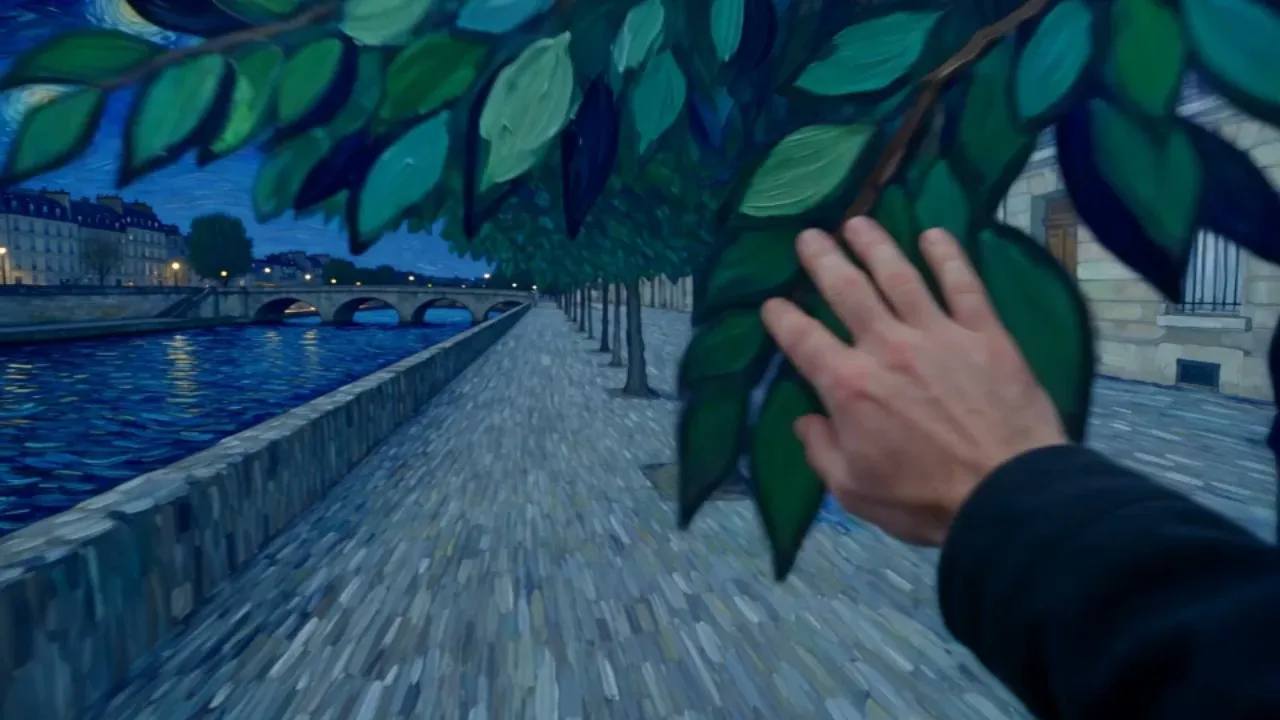
Try this promptThick impasto oil-painting animation: every frame built from heavy, three-dimensional paint, visible palette-knife texture and swirling brushstrokes; never drift into live-action footage. On a stormy deep-blue sea, a small wooden boat with a red sail climbs a painted wave slightly taller than the boat; the wave smashes over the bow in bursts of thick ultramarine and gold paint. The flying paint defies gravity, spirals up into the black sky and blooms into a glowing, rotating golden nebula and a flock of luminous painted gulls; light breaks through the clouds onto the sea as the camera rises to look down on the boat sailing toward a golden dawn. No dialogue; only crashing waves, howling wind and a swelling string section.
Try this promptTest reasoning with care
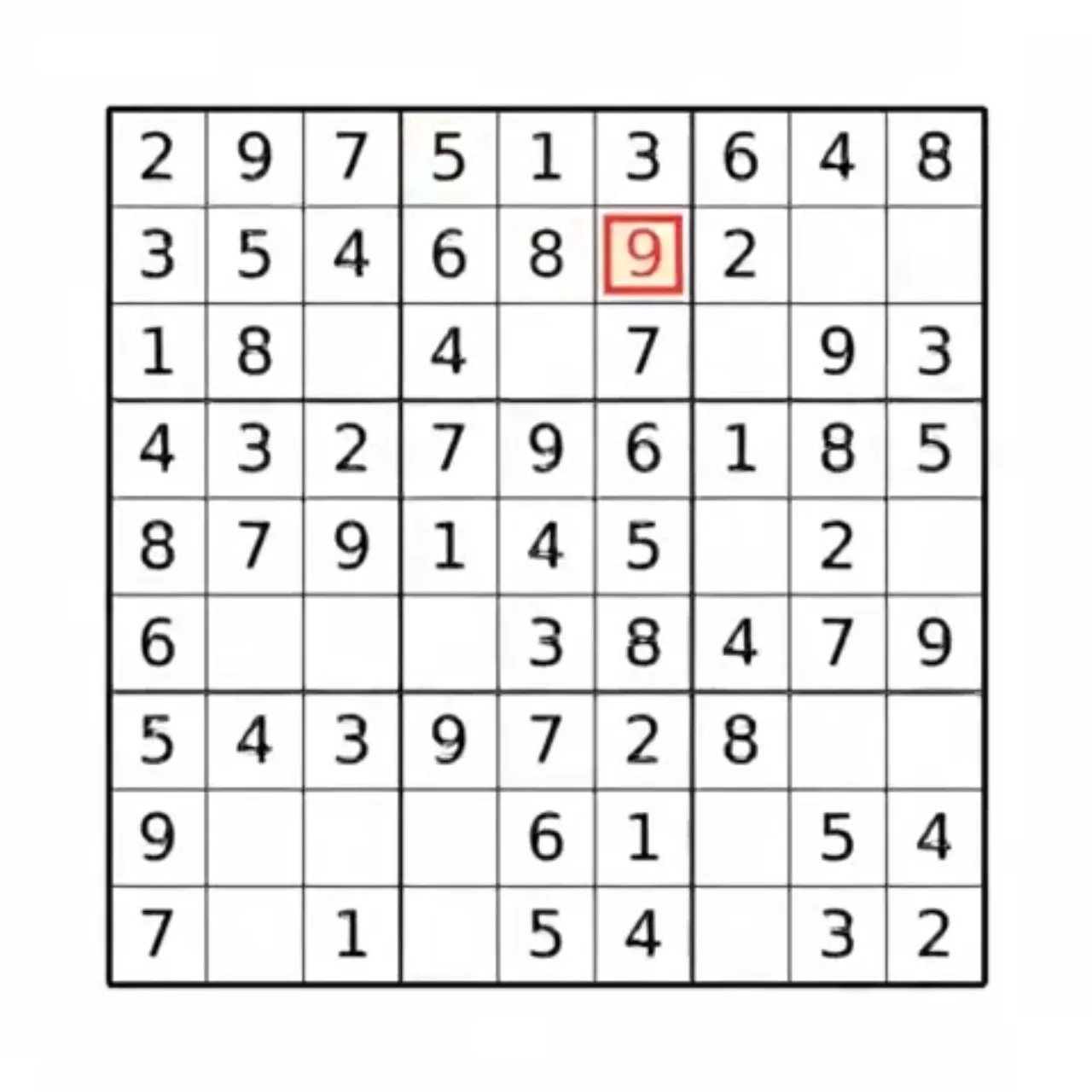
MAGI-2’s pre-trained checkpoint showed early visual reasoning, but the release notes say these behaviors are harder to trigger after post-training, so treat puzzle prompts as experiments. A public test (translated) asked for a correct Tower of Hanoi solution without listing the steps:
Top-down shot of a wooden Tower of Hanoi on a table. The left peg holds three rings from bottom to top: large red, medium yellow, small blue. A hand moves all three rings to the right peg following the rules: one ring at a time, and a larger ring is never placed on a smaller one.
Try this promptFix common problems
| Problem | Try this |
|---|---|
| Result ignores part of the prompt | Shorten it; give each beat one main action |
| Characters drift between shots | Add a character sheet reference and restate fixed traits |
| Bodies deform in action scenes | Describe each movement and its direction explicitly; slow the action |
| Cuts land in the wrong place | Use “hard cut at 12 s” or tie the cut to a specific event |
| Audio feels generic | Name each sound and its source, and keep dialogue lines short |
| Style drifts toward realism | State the medium, its textures and what it must never become |
| Camera feels flat | Describe path, height and speed; ask for continuous parallax |
Checklist before you generate
- Duration and aspect ratio stated.
- One subject with fixed traits, or a reference that defines it.
- Action split into beats with time ranges.
- One camera instruction per beat.
- Dialogue in quotes and key sounds named.
- Constraints: what must stay the same, what must not appear.
- Credit cost checked; test a short version first.
Try it on magi-2.si
MAGI-2 is live in our studio. Try this structure in text to video, image to video or media to video: start with a short version to check the result (MAGI-2 costs 25 credits per second), then extend it. Learn more in What is MAGI-2? and watch the MAGI-2 examples.
FAQ
How long can a MAGI-2 prompt be?
Reports mention scripts of up to about 20,000 characters, but longer is not always better. Most strong results come from a few hundred words organized as beats.
Does MAGI-2 rewrite my prompt?
MAGI-2 comes with an optional prompt enhancement switch. With it off, the model relies on its own understanding; with it on, an external model expands your script. Detailed prompts benefit less from enhancement.
Can I write prompts in languages other than English?
Yes. MAGI-2 understands prompts in several languages, and its pre-trained checkpoint even translated dialogue on request. The prompts above were translated from Chinese tests.
Where do these example prompts come from?
The night-market prompt is our own. The others are translated from public tests published by Chinese creators and tech media; results will vary between generations.
 Model guides